
Medically reviewed by Dr. Kamal Kiswani
BDS, MSc (Oral Implantology) | Dentist, Dev’s Oral Care, Camp, Pune | MSDC Reg. No. A-6323
An overbite is fixed with orthodontic treatment, chosen based on its severity, cause, and your age. In growing children, functional appliances and early treatment can guide the jaws and reduce the risk of injury to prominent front teeth. Teenagers and adults are usually treated with braces or clear aligners, and severe overbites caused by jaw-bone differences in adults may require jaw surgery along with braces. A small overbite is normal, and not every overbite needs treatment.
You notice it in a family photo. When you smile, your upper front teeth seem to cover most of your lower teeth, or they stick out a little more than you would like. For parents, it often shows up when a child’s adult teeth start coming in.
An overbite is one of the most common bite problems, and it can be corrected at almost any age. The best way to fix it depends on how severe it is, what is causing it, and whether the jaws are still growing.
This guide explains how to fix an overbite in children and adults, the treatment options available, how long treatment takes, and how to care for your teeth along the way.
When you close your back teeth together, your upper front teeth normally overlap your lower front teeth slightly. This small overlap is normal and healthy.
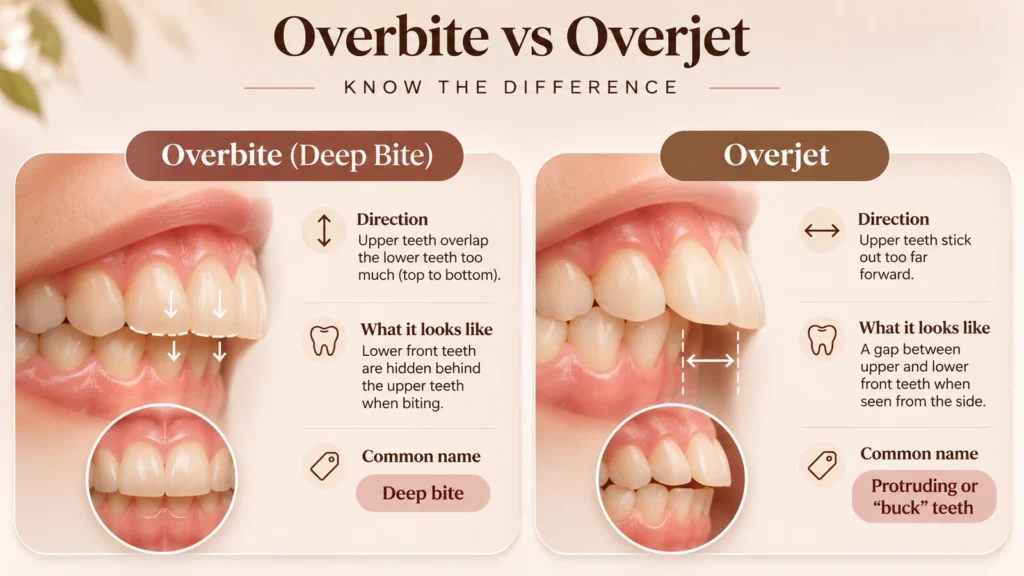
An overbite becomes a problem when the upper front teeth cover too much of the lower front teeth. Dentists call this a deep bite or an excessive overbite. It is a type of malocclusion, which simply means the teeth do not meet the way they should.
Think of the lid of a steel dabba. It should cover the rim of the box a little. If it slides down and covers half the box, the fit is wrong. A deep overbite works the same way.
Many people use the word “overbite” for teeth that stick out forward. Dentists call that an overjet. The two often appear together, but they are different.
An overbite can come from the teeth, the jaw bones, or a mix of both.
Whether the cause is mainly in the teeth or in the jaw bones is one of the main things that decides how the overbite is treated.
A mild overbite often causes no problems at all, and most bite problems are minor. A deeper overbite, though, can affect more than appearance:
Childhood is a good time to correct an overbite, because the jaws are still growing and can be guided as they develop.
Grandparents sometimes say, “Bachche ke daant apne aap theek ho jaayenge.”
Some minor bite differences do settle as adult teeth come in, but an overbite caused by the jaw bones does not correct itself. A check-up tells you which one your child has. Treatment for children may include:
Research shows that early treatment with a functional appliance for children with prominent upper front teeth can reduce the chance of those teeth being injured, compared with waiting until the teenage years. Not every child needs early treatment, so the timing is decided after an examination.
Adults can have their overbite corrected too. The jaws have stopped growing, so treatment focuses on moving the teeth and, in severe cases, repositioning the jaws.
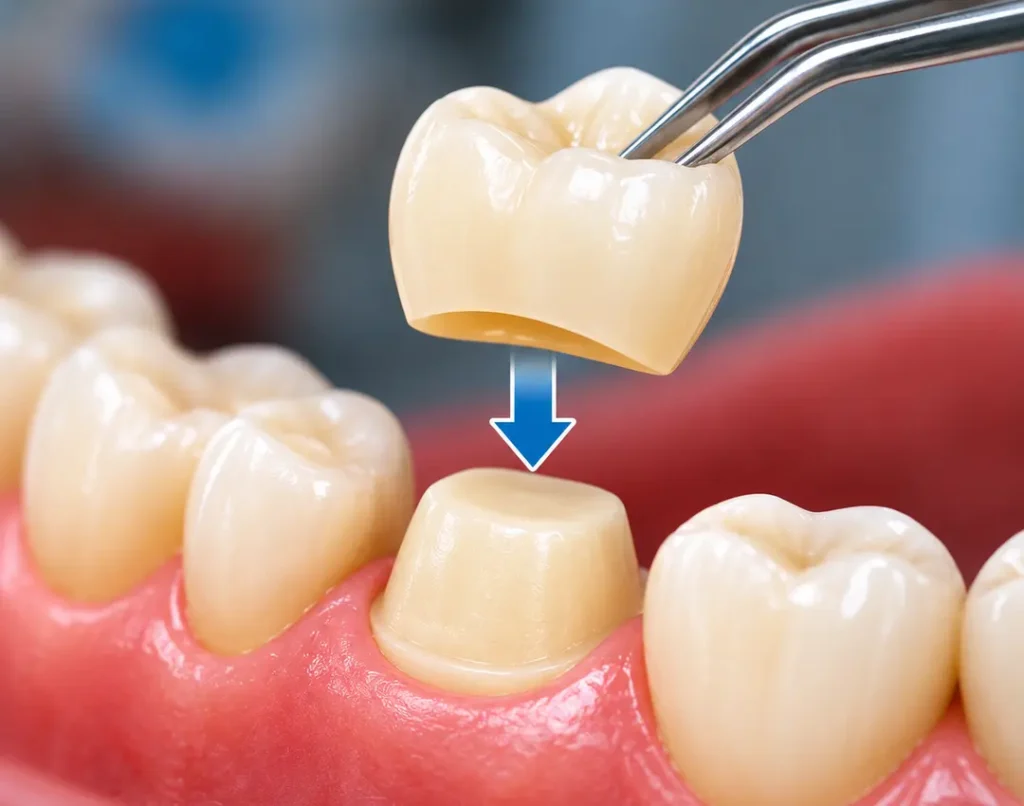
For adults with worn or damaged front teeth, dental restorations may be part of the plan after the bite has been corrected.
| Treatment | Who it usually suits | Removable | Points to know |
|---|---|---|---|
| Functional appliance | Growing children and young teenagers | Some are removable, some are fixed | Works with jaw growth; needs good cooperation from the child |
| Metal or ceramic braces | Teenagers and adults with mild to severe overbites | No | Very adaptable; needs careful cleaning around brackets |
| Clear aligners | Teenagers and adults with suitable cases | Yes | Nearly invisible; must be worn for the advised hours every day |
| Jaw surgery with braces | Adults with severe overbites caused by the jaw bones | No | Major treatment, used only when braces alone cannot correct the bite |

At Dev’s Oral Care, the first step is understanding what kind of overbite you have and why.
Once treatment starts, you will have regular visits to adjust the braces or check the progress of your aligners. With fixed braces, these visits are usually every six to eight weeks.
Fixed braces usually stay on for about one to two years, though how long braces take depends on several factors. The exact time depends on how deep the overbite is, your age, and how well the treatment plan is followed.
When braces or aligners are finished, a retainer is needed to stop the teeth from moving back.
The dentist will tell you how long and how often to wear it. Not wearing the retainer as advised can let the corrected bite slip back.
Good care during treatment protects your teeth while they move.
“Ek chikki se kya hoga?” is a question we hear often. Hard, sticky sweets like chikki and toffee can loosen a bracket in one bite, so it’s best to avoid them until treatment is complete.
Teeth may feel sore for a few days after braces are fitted or adjusted. This usually settles on its own.
An overbite cannot be fixed with home remedies. Pushing teeth with your fingers, jaw exercises, or rubber bands without supervision cannot safely move teeth or change the jaw bones, and it can damage your teeth and gums.
Clear aligners bought without a dentist’s examination are also not a safe shortcut. An overbite caused by the jaw bones needs a different plan from one caused only by tooth position, and that can only be decided after an examination and X-rays.
In many cases, yes. Clear aligners can correct many overbites, and growing children may be treated with functional appliances. Severe overbites caused by the jaw bones in adults may need braces combined with jaw surgery.
No. Adults can have braces or clear aligners, and severe jaw-related cases may need surgery along with braces.
Most people feel soreness or pressure for a few days after braces are fitted or adjusted, or when starting new aligners. It usually settles on its own.
Fixed braces usually take about one to two years. The time depends on the severity of the overbite, its cause and your age, and a retainer is needed afterwards.
A child's bite can be checked as soon as a parent notices a problem. There is no need to wait until all the baby teeth have fallen out.
Our guide on when to see an orthodontist for your child explains more.
There is no single answer to how to fix an overbite. A mild overbite may need no treatment at all. A growing child may benefit from guidance while the jaws develop, while teenagers and adults are usually treated with braces or clear aligners, and severe jaw-related cases may also need surgery.
The right treatment depends on what is causing your overbite, and it works best when you wear a retainer consistently.
If you or your child has an overbite and you would like to understand your options, the team at Dev’s Oral Care, Camp, Pune, can examine your bite and explain a treatment plan that suits you.
You can read more about our orthodontic treatment in Pune.
Disclaimer: This article is for general information only and does not replace a dental consultation. The right treatment for an overbite depends on an individual examination and X-rays.
Medically reviewed by Dr. Kamal Kiswani
BDS, MSc (Oral Implantology) | Dentist, Dev’s Oral Care, Camp, Pune | MSDC Reg. No. A-6323