A few days back, I treated a patient who was extremely nervous about dental work. Many of you will relate to this. The thought of getting an injection in the gums or keeping your mouth open for too long is enough to make anyone hesitate.
He came in for a root canal. Before starting, I walked him through the entire process in simple language so he knew exactly what to expect. The treatment went well. But when my team later asked him to choose the crown for his tooth, he looked at me and asked the same question I hear very often:
“Is it really necessary to put a crown? Will it be ok if I have a root canal without a crown?”
This question is never just about money. I know that.
It is about fear, time, the recovery, and the hope that maybe one more procedure can be avoided. You simply want to know if the tooth is fine for now or if delaying the crown will actually create bigger problems.
As an implantologist, I’ve seen this pattern many times. Patients feel relief after the root canal because the pain is gone. So they assume the problem is fixed. But when a crown is delayed, the tooth often fails in ways that could have been prevented.
So let’s break this down in plain, honest language.

A tooth that has gone through a root canal is not the same tooth you had before.
Once the nerve is removed, the tooth becomes:
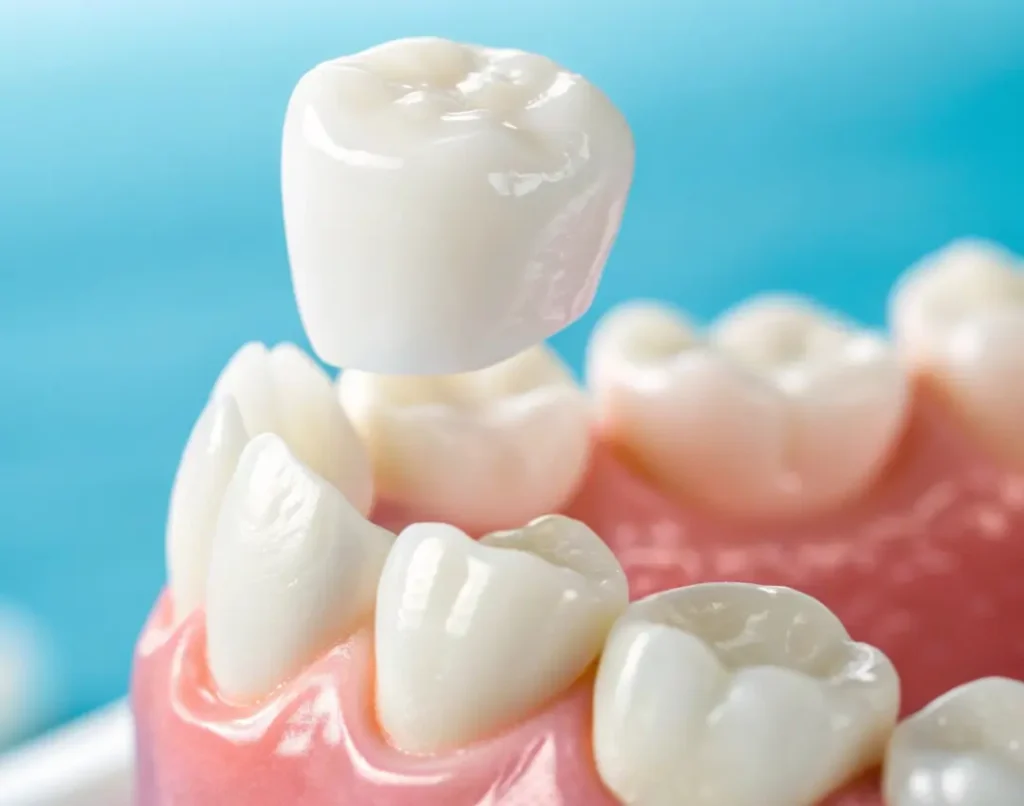
This is not your fault. It is simply biology. The remaining tooth structure is weaker after infection and cleaning. A dental crown acts like a protective jacket around the tooth. It absorbs pressure when you chew, helping prevent cracks.
Without this protection, the tooth can fracture suddenly. And when that happens, the damage is usually too deep to repair, which often means extraction.
I don’t want you to reach that stage.
Here is the truth most people don’t hear clearly:
A root canal without a crown might last a few weeks, a few months, or sometimes even longer… but it always carries a high risk of failure.
There is no predictable timeline because every case is different.
However, research and clinical experience show:
Some manage a year.
But most return with a cracked or reinfected tooth that now requires more expensive treatment or tooth extraction.
So the real question is not “How long will it last?”
It is “How much risk am I comfortable taking?”
Here’s what I commonly see in the clinic:
My goal is to prevent you from reaching this stage.
You might relate to some of these reasons:
All of these feelings are valid.
You are not being careless. You are simply trying to understand your options.
If you are about to finish a root canal or recently had one, here’s the safest approach:
A crown is not an “extra” treatment.
It is the final, essential step that ensures your root canal lasts for years.
If you have been searching for “how long does a root canal last without a crown”, chances are you’re trying to make the most intelligent decision without rushing into something. I respect that. You deserve clear, honest guidance.
My only intention with this explanation is to help you avoid avoidable problems. A root canal without a crown is like repairing a wall but leaving it unpainted in the rain. It may hold for some time, but eventually, it gives way.
Your tooth is valuable. Protect it while you still can.