
BDS, MSc in Oral Implantology from Germany | 25+ years of Experience
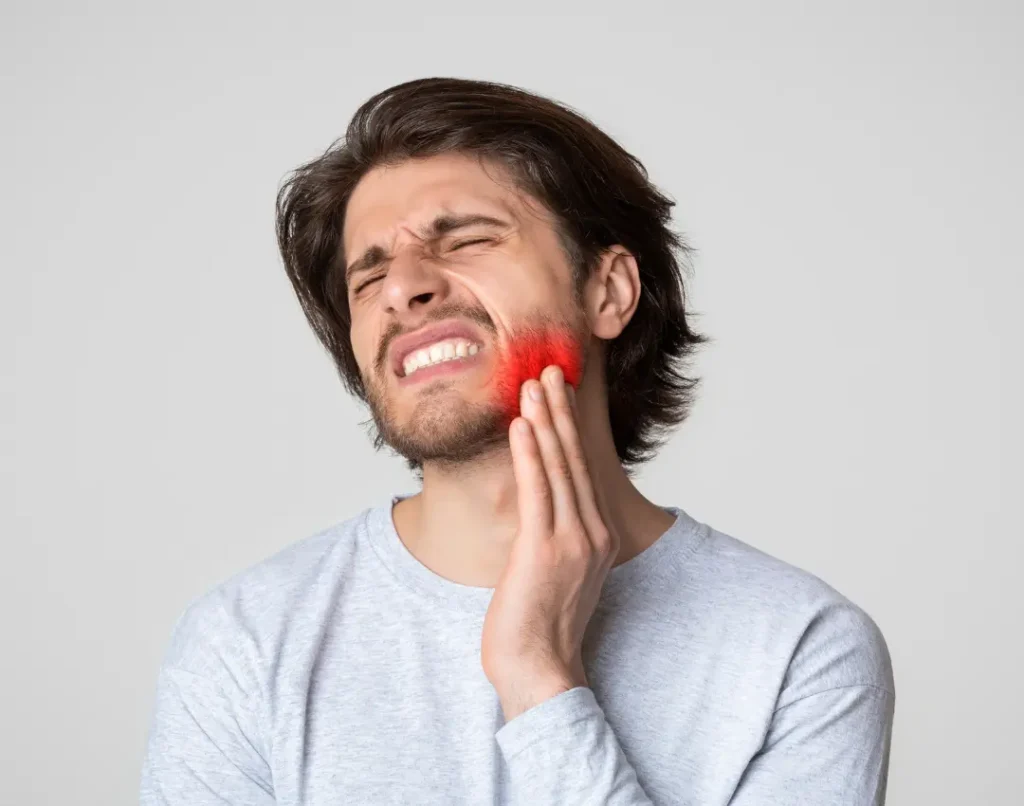
Yes. A wisdom tooth can cause jaw pain and trigger headaches too. When the tooth is stuck under bone, half covered by gum, or pushing at an angle, it irritates the surrounding tissue and muscles. That pain can then travel along the same side of your face, into the ear, and up to the temple.
You have been rubbing the side of your jaw for a few weeks now. It aches when you chew. Some mornings it feels stiff. Lately, you also have a dull headache near your temple on the same side.
So you started searching, and the same thought keeps coming back. Could this be my wisdom tooth? Can wisdom teeth cause jaw pain and headaches?
It is a fair question, and I hear it often in my clinic. The honest answer has two parts. Jaw pain from a wisdom tooth is very real and very common. Headaches are a more complicated story, and I want to explain it carefully, because much of what you read online overstates it.
Let me walk you through what is actually happening back there.
A wisdom tooth is the last tooth at the back of each side of your mouth. Most people get them in their late teens to mid-twenties. By then, the jaw is already full. Often, there isn’t enough room left.
When a wisdom tooth does not have room, it gets stuck. Dentists call this an impacted tooth. It may push sideways into the tooth in front of it. It may come out only halfway. It may stay buried under the gum and bone.
Any of those situations can hurt. The pain usually sits deep in the back of the jaw. It can feel like pressure, a throb, or soreness that worsens when you bite down.
So when patients ask me, “Can wisdom teeth cause jaw pain?”, the answer is yes. What matters more is what’s causing it, because the fix differs for each one.
Here are the common reasons a wisdom tooth starts to hurt.
A gum flap that traps food. When a wisdom tooth comes out only partly, a small flap of gum stays over it. Food and bacteria slip under that flap. Your toothbrush cannot reach it. The gum becomes swollen and sore. This is called pericoronitis. It can come and go for months, feeling fine one week and awful the next.
Pressure on the tooth in front. An angled wisdom tooth can press against your second molar. That pressure alone can ache.
Decay you cannot see. The back of the mouth is hard to clean. A wisdom tooth can decay, and so can the side of the healthy tooth next to it, exactly where the two meet. That spot is hidden from view. It usually shows up only on an X-ray.
Infection. If bacteria get deeper, you may get swelling, a bad taste, or pus. This is when pain often stops being a background ache and starts keeping you awake. Don’t ignore a wisdom tooth infection; it poses a serious risk. For more detail, you can read my blog about the dangers of ignoring wisdom tooth infection.
A cyst. Less often, a fluid-filled sac can form around a buried wisdom tooth and slowly affect the surrounding bone. This one is quiet. It may cause no pain at all in the early stage, which is part of why we take X-rays.
This is where I want to be straight with you.
A wisdom tooth does not directly cause a headache the way it causes a toothache. But it can set off a chain of events that ends in head pain. This happens in two main ways.
Referred pain. The nerve that supplies your teeth and jaw also supplies large parts of your face and head. Pain signals from the back of the jaw don’t always stay there. You may feel it in your ear, temple, the side of your head, or down your neck. Your brain is not great at pinpointing exactly where deep pain is coming from.
Muscle strain. This one is more common than people realise. When one side of your mouth hurts, you start chewing on the other side without thinking. You may clench at night. Your jaw muscles, including the wide, flat muscle at your temple, work harder and stay tight. Tight jaw and temple muscles can produce a tension-type headache, often on the same side as the sore tooth.
So, can wisdom teeth cause a headache? They can contribute, usually through pain referral or muscle strain. What I would not tell you is that wisdom teeth cause most headaches. Most are not. Migraines, sleep problems, stress, eye strain, sinus trouble and jaw joint disorders are all far more common reasons for recurring head pain.
Jaw pain and headaches are not related in every case, and I always check both before linking them. But when an upper or lower wisdom tooth becomes infected, the pain does not always stay in the jaw. It can travel as referred pain to the head. If your headache started around the same time as a sore, swollen wisdom tooth area, that link is worth checking.
Here is a useful way to think about it. If your headache came with jaw pain, stays on the same side, and worsens when you chew, there is a good chance the two are connected. If you have had headaches for years and your jaw feels fine, your wisdom tooth is probably not the culprit.
Jaw pain has several possible sources. A quick comparison helps.
| What it may be | What it often feels like |
|---|---|
| Wisdom tooth problem | Pain at the very back of the jaw, worse when biting, gum swollen or tender, bad taste, sometimes hard to open wide |
| Jaw joint disorder (TMJ) | Pain just in front of the ear, clicking or popping, jaw feels tired, often worse in the morning |
| Night grinding | Sore jaw muscles on both sides, flattened or sensitive teeth, dull morning headache |
| Sinus trouble | Upper back teeth ache together, worse when you bend forward, along with a blocked nose |
These can overlap. Plenty of people have a grumbling wisdom tooth and a clenching habit. That is exactly why guessing from a search result is risky, and why an examination settles it quickly.
When a patient comes in with jaw pain, I first press gently on the gum behind the last molar, then on the chewing muscles and in front of the ear. A tender, swollen gum flap points to the wisdom tooth. Sore muscles on both sides and worn teeth point more towards clenching. I also measure how wide you can open. Many patients have a bit of both, so I examine you and take X-rays.
One thing I want patients to understand is that we do not decide about a wisdom tooth by looking at it alone. What you can see is only a small fraction of the tooth.
At the appointment, we usually check:
That last point matters. Knowing exactly where the nerve runs before surgery helps us plan a safer extraction, rather than discovering a surprise midway.
No. And I would encourage you to be cautious with any clinic that says otherwise without looking at an X-ray first.
If a wisdom tooth has come out fully, sits in a normal position, bites properly against the opposite tooth, and you can clean it, there is usually no reason to remove it. We keep an eye on it and leave it alone.
Removal is generally discussed when the tooth is causing a problem or is clearly going to. That includes repeated infection around the gum flap, decay in the wisdom tooth or the tooth beside it, a cyst, damage to the neighbouring molar, or pain that keeps returning. I’ve already covered in detail the reasons when you should consider wisdom teeth removal. You may read it for a better understanding.
I firmly recommend removing a wisdom tooth in three situations: pain that keeps coming back, repeated infection, or damage to the healthy tooth next to it. In these cases, waiting usually makes things harder, not easier. If none of these applies and the tooth is healthy, we simply keep watching it.
You may also have heard that wisdom teeth push your front teeth out of alignment. That belief is common, but front teeth tend to shift with age in people who never had wisdom teeth. It is not a strong reason on its own to take a healthy tooth out.
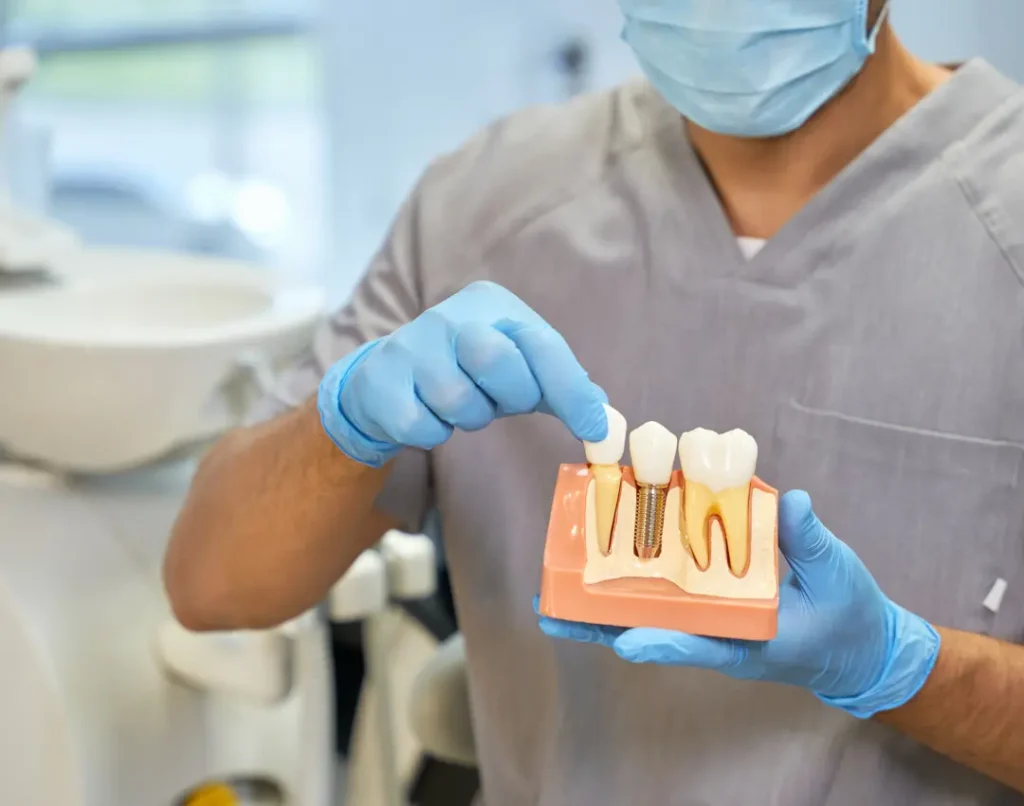
I deal with implants every week, so I see the later chapter of this story more often than most.
Here is the pattern. A wisdom tooth angles into the second molar. Food packs into the gap between them. Decay starts on the back surface of that second molar, in a spot no brush can reach. It goes unnoticed because people blame the pain on the wisdom tooth. By the time you find it, the second molar is badly damaged. Sometimes it can be saved. Sometimes it can’t be saved, and now you are replacing a good chewing tooth you were born with.
That is the part worth taking seriously. The wisdom tooth is rarely the valuable tooth. The healthy molar in front of it is. Protecting that tooth is usually the real reason to act early.
On every wisdom tooth X-ray, I don’t look at the wisdom tooth first. I look at the back surface of the molar in front of it. Decay there is invisible in the mirror and often painless until it is deep. If I catch it early, I can usually fill the molar and keep it.
Most people worry more than they need to, usually because of a story they heard from a cousin.
The area is completely numbed first, so you feel pressure and movement but not pain. Depending on the tooth’s angle and depth, we may need to open the gum and remove it in sections. Taking it out in pieces is often gentler on the bone than forcing it out whole. Stitches may or may not be needed.
For lower wisdom teeth, the key planning question is how close the roots sit to the nerve that supplies feeling to the lip and chin. When the regular X-ray suggests they are close, I ask for a 3D scan before deciding anything. In some cases, a partial removal, where the roots are deliberately left in place, can be a safer option.
When a wisdom tooth sits extremely close to the nerve canal or other important structures, I advise a CBCT, which is a 3D scan, before surgery. It shows exactly how close the roots are to the nerve. If the risk of nerve injury is real, I recommend a coronectomy. In this procedure, only the crown of the tooth is removed, and the roots are left in place, away from the nerve.
Afterwards, expect some swelling and soreness. Swelling usually builds over the first couple of days, then begins to settle. Most people manage with the pain medication their dentist advises, soft food, and a few quiet days. Cold packs on the first day help. Avoid heavy exercise, smoking, and straws while the socket heals.
I see every patient for a review about a week after removal. If the pain is significant and not settling before then, please come back earlier. Do not wait for the appointment. In my experience, younger patients usually recover faster. When a wisdom tooth has been infected repeatedly before removal, healing can be slower and more difficult, which is another reason not to let repeated flare-ups drag on.
Like any surgical procedure, wisdom tooth removal is generally safe, but you should understand the possible risks before deciding.

Until you are examined, these steps are safe and often help:
Painkillers can mask the problem for a few days, but they do not treat the cause. If the pain keeps coming back, that is information, not something to push through.
One thing I see often: patients press a painkiller tablet directly against the sore gum. Please don’t. Some tablets can burn the gum and leave a painful ulcer on top of the original problem. Swallow any medicine as directed, keep rinsing with warm salt water, and write down when the pain is worst. That note helps me more than you would expect.
Please see a dentist or go to a hospital the same day if you have:
A dental infection in the lower jaw can spread into the neck tissues. It is uncommon, but serious, and it can spread faster than people expect.
Separately, a headache that is sudden and severe, or comes with vision changes, weakness, confusion or a stiff neck, is a medical emergency and has nothing to do with your teeth. Get medical help immediately.
A wisdom tooth can absolutely cause jaw pain. It can contribute to headaches, usually through referred pain or tight jaw muscles, but it is not the usual cause of most headaches. The only way to know which applies to you is an examination and an X-ray, and that visit is short.
If the pain has been coming and going for weeks, that pattern is telling you something. Flare-ups that keep returning rarely settle permanently on their own.
A flare-up often eases within a few days, especially if you keep the area clean. The relief is frequently temporary. If the tooth is impacted or partly covered by gum, the pain tends to return because the underlying cause has not changed.
Yes. Referred pain and muscle tension usually follow the same side as the affected tooth. One-sided jaw and temple pain that worsens with chewing needs an examination.
We give antibiotics to settle an active infection and reduce swelling, but they do not remove the trapped food, the decay, or the gum flap causing it. Symptoms often return after the course ends unless you treat the cause.
It can feel that way. The ear and the back of the jaw share nerve pathways, so wisdom tooth trouble can sometimes feel like an earache. An ear infection can also cause jaw pain, so if your ear is discharging or your hearing changes, see a doctor as well.
When removal is genuinely needed, younger patients often heal faster because the roots are less developed and the bone is less dense. That is not a reason to remove a healthy, well-positioned tooth. The decision should follow the X-ray, not your age alone. Dr Kiswani also notes that teeth with repeated infections tend to heal with more difficulty, so delaying a needed removal can make recovery harder.
Some problems are silent, such as decay between the wisdom tooth and the molar in front, bone loss, or a cyst. Ask your dentist to show you the X-ray and explain exactly what they can see. You should leave that conversation understanding the reason.
Yes, it can be a reason. However, if the headache is due to grinding teeth then you will feel it when you wake up and pain is felt on both sides. Whereas if the headache is due to wisdom teeth, it will be felt on one side.
If your jaw has been aching for weeks, or the same headache keeps returning on one side, you don’t have to keep guessing.
A single visit is usually enough to give you a clear answer. We will examine the area, take an X-ray, and show you exactly what is going on, including whether your wisdom tooth needs to come out or can simply be watched. If removal is not needed, we will tell you that.
To book a consultation with Dr Kamal Kiswani, a well-known dentist in Pune, call the clinic or request an appointment online. Bring any previous X-rays if you have them.
BDS, MSc in Oral Implantology from Germany | 25+ years of Experience