If I have just told you that your tooth needs to be removed, I know the next few questions usually come very quickly.
“What am I going to do about the missing tooth?”
“Will I have a gap?”
“Can I still eat normally?”
And quite often, there is one more:
“If we’re already taking the tooth out, can you put the implant in at the same time?”
The answer is: sometimes, yes.
A dental implant after tooth extraction can be placed during the same appointment in carefully selected cases. This is known as immediate implant placement.
And if you are a suitable candidate, I can understand why you would prefer this approach. You may not want to spend months waiting for the extraction site to heal before even beginning the implant procedure. You may want to get back to chewing comfortably. If it is a front tooth, you may be understandably concerned about how the missing tooth will affect your smile.
The good news is that you don’t necessarily have to wait months to start replacing your tooth.
When I assess you for an immediate implant, I look at several aspects of the tooth, the surrounding tissues and your treatment goals to determine how we can give you the best possible outcome.
The International Team for Implantology (ITI) recognises immediate, early and delayed implant placement as established treatment approaches, with the timing chosen according to the individual patient and extraction site. (ITI Academy)
So, if you’re wondering whether your tooth can be replaced immediately, let’s look at what actually goes into that decision.

An immediate dental implant means the implant is placed during the same appointment as the tooth extraction.
Traditionally, implant treatment may follow this sequence:
Tooth extraction → healing → implant placement → healing → final crown
With immediate placement, it can look more like:
Tooth extraction → implant placement → healing → final crown
That difference can be significant for a patient.
Instead of completing the extraction and then waiting for the area to heal before starting the next surgical stage, we can sometimes begin replacing the tooth immediately.
And yes, this can make the overall treatment journey more convenient.
But there is one thing I always clarify with patients:
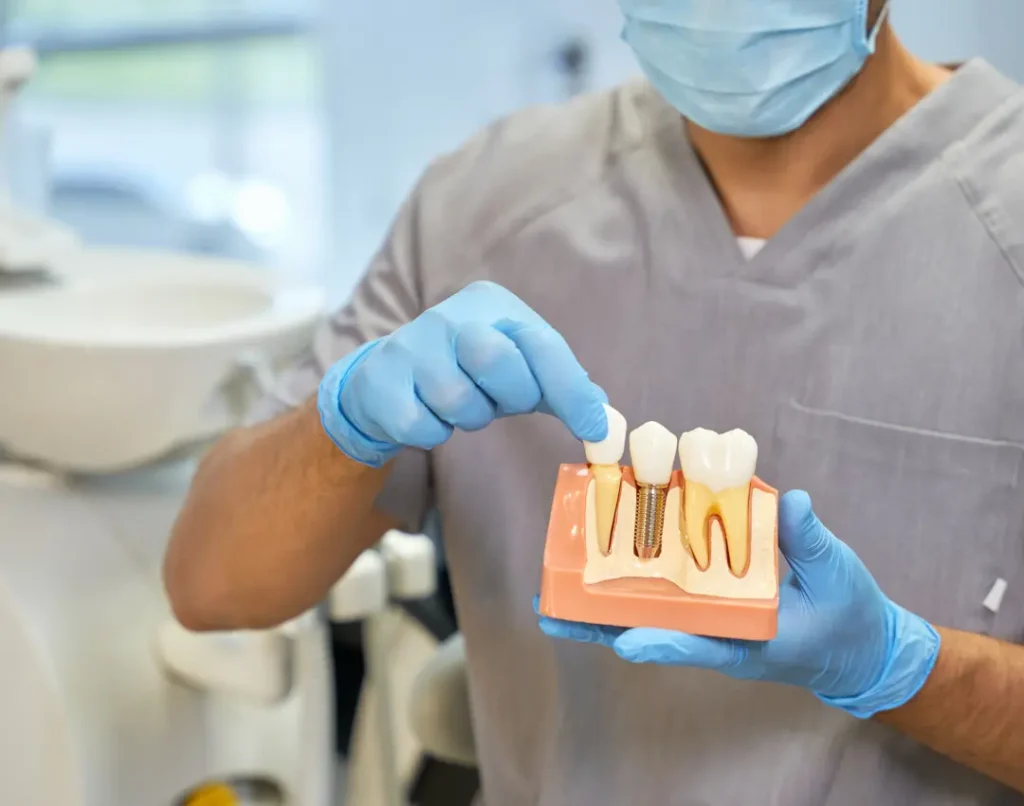
The implant is the foundation that goes into your jawbone.
Your crown is the visible part of the tooth that sits on top of it.
In selected cases, a temporary tooth can be provided immediately or shortly after implant placement. The final crown is fitted once the implant has healed sufficiently and is ready for its permanent restoration.
So when someone says “same-day implant,” ask what exactly is being completed on the day.
You may have:
Extraction + implant placement on Day 1
and potentially:
Temporary tooth on Day 1
while the:
Final crown comes later.
That distinction will make your treatment timeline much easier to understand.
When you’re losing a tooth, you are usually not just thinking about the tooth itself.
You’re thinking about what life will be like without it.
If it is a molar, you may be worried about chewing.
If it is a front tooth, you may be worried about smiling or speaking.
And sometimes the biggest frustration is simply knowing that you’ve already gone through one dental procedure and now have another long treatment process ahead.
This is where immediate implant placement can be particularly appealing.
If your extraction site is suitable, we can remove the tooth and begin the replacement process during the same appointment.
That can mean:
There is also an important planning advantage.
When I know an implant will replace the tooth, I can plan the extraction with the future implant in mind.
The aim is to remove the tooth carefully, preserve the surrounding tissues wherever possible and create the best possible foundation for your replacement tooth.
There are a few important factors I look at before recommending immediate placement.
An implant needs to be stable when it is first placed. This initial mechanical stability is called primary stability.
The extraction socket itself does not always provide all the support the implant needs. Depending on the tooth and your anatomy, the implant may engage bone beyond the socket to achieve the stability required for healing.
This is one of the reasons imaging and careful planning are important.
I’m not simply asking:
“Can an implant fit here?”
I’m asking:
“Can we place the implant in the ideal position and give it the stability it needs?”
That is a much more useful question.
The condition of the bone around your tooth is an important part of planning.
A tooth that has fractured may leave a very different site from one that has experienced extensive bone loss.
But even when there is some damage, that doesn’t automatically mean immediate implant treatment is off the table.
Recent research has explored immediate placement in damaged extraction sockets, with a 2025 systematic review and meta-analysis reporting favourable short-term outcomes in the limited randomised evidence available. The authors also emphasised that careful case selection remains important. (PubMed)
If we’re replacing a back tooth, your main concern may be restoring your chewing function. If we’re replacing a front tooth, you’re probably looking in the mirror and wondering:
“Will anyone be able to tell it’s an implant?”
That’s a completely reasonable question.
For a natural-looking result, the gum tissues surrounding the implant matter. I look at the thickness and shape of the soft tissues, the position of the gumline and the surrounding teeth when planning an implant, particularly for single tooth implants in the smile zone.
The aim is not just to give you a tooth that functions. It should look like it belongs with the rest of your smile.
This is something I wish more patients knew before they start researching implants.
An implant isn’t simply placed into the hole where your old tooth was. We plan the implant around where your new tooth needs to be.
That means considering the final crown, your bite, neighbouring teeth, the gumline and available bone.
This is called restoration-driven planning.
And it is particularly important for the front teeth, where even small differences in implant position can affect the final appearance.
In many suitable cases, an immediate dental implant after tooth extraction can be a great option. But sometimes, I may recommend giving the area a little more time before placing the implant.
Here are some of the situations I look at:
If the area has an acute infection, immediate placement may not be the right choice. However, an infected tooth does not automatically mean you cannot have an immediate implant. Selected sites with previous or chronic infection may still be considered when the area can be thoroughly cleaned, and the implant can achieve adequate stability.
An implant needs good initial stability. If there isn’t enough suitable bone to place the implant securely in the ideal position, I may recommend bone grafting or allowing the site to heal before implant placement.
Sometimes the bone or gum tissues need to heal or be rebuilt before we place the implant. In these situations, waiting can actually be part of the implant treatment, not a delay in treatment.
This is particularly important for front teeth. I wouldn’t want to place an implant simply because there is an empty socket. It needs to be positioned correctly for the final crown, your bite and the appearance of your smile.
If waiting allows us to achieve that more predictably, I may recommend it.
Things such as uncontrolled gum disease, poor oral hygiene or other factors affecting healing may need to be addressed before implant placement.
The important thing to remember is that “not today” does not mean “not at all.”
Sometimes the best implant treatment starts with preparing the site properly first.
If you’re nervous because you don’t know what the appointment will involve, here’s the process in simple terms.
This is ideally done before the extraction. I assess the tooth, surrounding tissues and bone and plan where the implant and final crown should go. Depending on your case, X-rays or 3D imaging such as CBCT may be recommended.
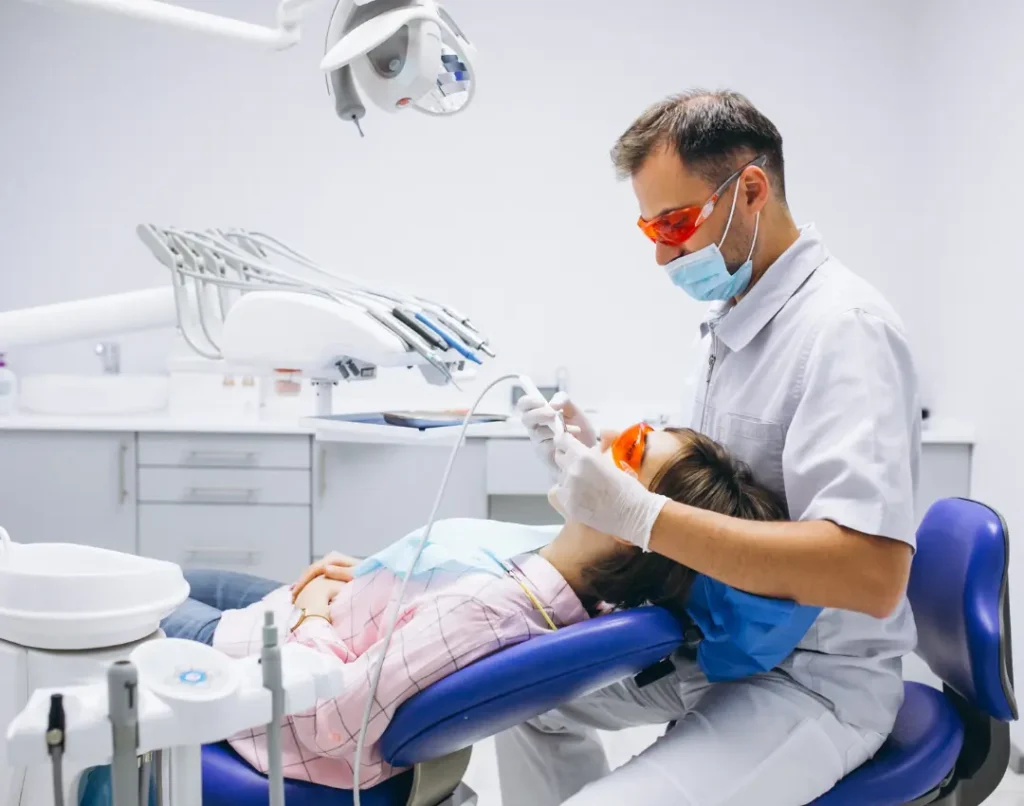
The extraction is performed under local anaesthesia. When immediate implant placement is planned, preserving the surrounding tissues becomes particularly important. I use extraction techniques that minimise trauma to hard and soft tissues and ensure thorough removal of granulation tissue from the socket.
Once the tooth is out, the area is cleaned and assessed.
If the site is suitable, the implant is placed immediately. It is positioned to align with the planned final tooth and checked for stability.
If additional bone or tissue support is needed, grafting can be incorporated into the treatment where appropriate.
Depending on the implant’s stability, location and your bite, a temporary restoration may be possible.
The implant then integrates with the surrounding bone through osseointegration. After the appropriate healing period, the final crown is placed.

Note: If you require significant bone grafting, additional tissue procedures, or other treatments, the overall timeline may be longer. These are treatment ranges, not promises. Your dentist decides when the implant is ready, based on its stability and healing.

Both immediate and delayed implants can be suitable options, depending on your individual dental condition. At Dev’s Oral Care, we assess the condition of your tooth, gums and jawbone before recommending an approach. This helps us decide which option is better suited to your particular situation.
For the right patient, yes.
The ITI’s 2023 consensus reports that immediate placement with immediate restoration/loading for selected single-tooth replacements in the anterior maxilla is a clinically documented protocol with high implant survival rates in carefully selected populations. (ITI Academy)
That’s an important point.
Immediate implant treatment isn’t simply a trend or a shortcut.
It is an established implant treatment approach that can work very well when the patient and site are appropriately selected.
And from a patient’s perspective, the biggest advantage is often straightforward:
You can start replacing your tooth immediately.
If you’re undergoing a tooth extraction, you may not have to spend months with a gap before starting your implant treatment.
In suitable cases, a dental implant can be placed after tooth extraction during the same appointment, and a temporary tooth may also be placed while the implant heals.
As your dentist, my focus is on finding the right approach for your tooth, bone, gums, bite and smile, and planning the treatment from the very beginning.
If you’re considering an immediate dental implant after tooth extraction, speak to your dentist before the extraction. That way, your replacement options can be assessed and planned in advance.
And if you’re looking for a dentist in Pune, a consultation at Dev’s Oral Care Dental Clinic & Implant Centre can help you understand whether immediate placement is suitable for you and what your expected timeline could look like.
In the right case, your implant journey can begin the very same day your tooth is removed.
Not necessarily. Both procedures are performed under local anaesthesia, and combining them means you may avoid having to undergo a separate surgical appointment for implant placement. Some soreness or swelling afterwards is normal and can be managed with your dentist’s aftercare instructions.
Dental implants can remain functional for many years, and some last decades with proper care. Their long-term success depends on factors such as gum health, oral hygiene, smoking, bite forces, overall health and regular maintenance.
It totally depends on your case. Some patients have sufficient bone for immediate placement without additional grafting. Others may benefit from grafting to support the implant and surrounding tissues.
Yes. Single tooth implants can be placed immediately in suitable cases. This can be particularly useful for front teeth, where the position of the implant and surrounding tissues are important to the appearance of the final crown.
The procedure is performed under local anaesthesia, so it’s generally not painful. Some soreness or swelling can occur afterwards as the area heals, but it can be managed with specific aftercare measures.
You may need to eat softer foods initially and avoid chewing directly on the implant site. I’ll advise you when you can gradually return to your normal diet based on your healing.
Possibly. If the implant is stable and your case is suitable, I may provide a temporary tooth while the implant heals. This depends on the implant’s location, stability and your bite.
Immediate placement can be a good option for suitable cases, but waiting may be more predictable when there is infection, bone loss or insufficient stability.