If you are having uneven teeth or have noticed someone with uneven teeth, then chances are that you might have thought about orthodontic treatments.
You may have noticed your teeth shifting slowly.
Food gets stuck more often than it used to.
Photos don’t feel as comfortable anymore.
Or someone casually mentioned braces, and the idea stayed with you.
Most patients don’t walk into Dev’s Oral Care saying they want orthodontic treatment.
They say something else.
“Doctor, something feels off. I’m not sure if it’s serious.”
That pause is normal.
And it’s usually the right place to start.
For most adults, orthodontic treatment becomes a question only when small issues start adding up.
Teeth that were manageable earlier begin to crowd.
Cleaning takes more effort.
Certain teeth take on more load during chewing.
These changes are gradual.
That’s why they’re easy to ignore.
But clinically, alignment problems don’t stay neutral.
They either remain stable or progress slowly.
And that difference decides whether waiting is harmless or costly.
For most adults, orthodontic treatment is less about looks and more about long-term maintenance.
Straight teeth look better, yes.
But the bigger benefit is functional.
Crowded teeth trap plaque.
Misaligned bites overload specific teeth.
Cleaning becomes inefficient even with good habits.
Over time, this shows up as gum issues, sensitivity, repeated fillings, or uneven wear.
Many people believe straight teeth are optional.
Clinically, alignment often decides how long your natural teeth stay healthy.
When I recommend orthodontic treatment, it’s rarely about perfection.
It’s about making daily care easier for the next few decades.
Age is rarely the limiting factor people think it is.
Adults often assume orthodontic treatment works best only for teenagers.
In real practice, adults usually do very well.
They follow instructions.
They show up on time.
They are consistent.
Yes, tooth movement can be slightly slower with age.
But outcomes are often more predictable because compliance is higher.
Visibility is also less of a concern now.
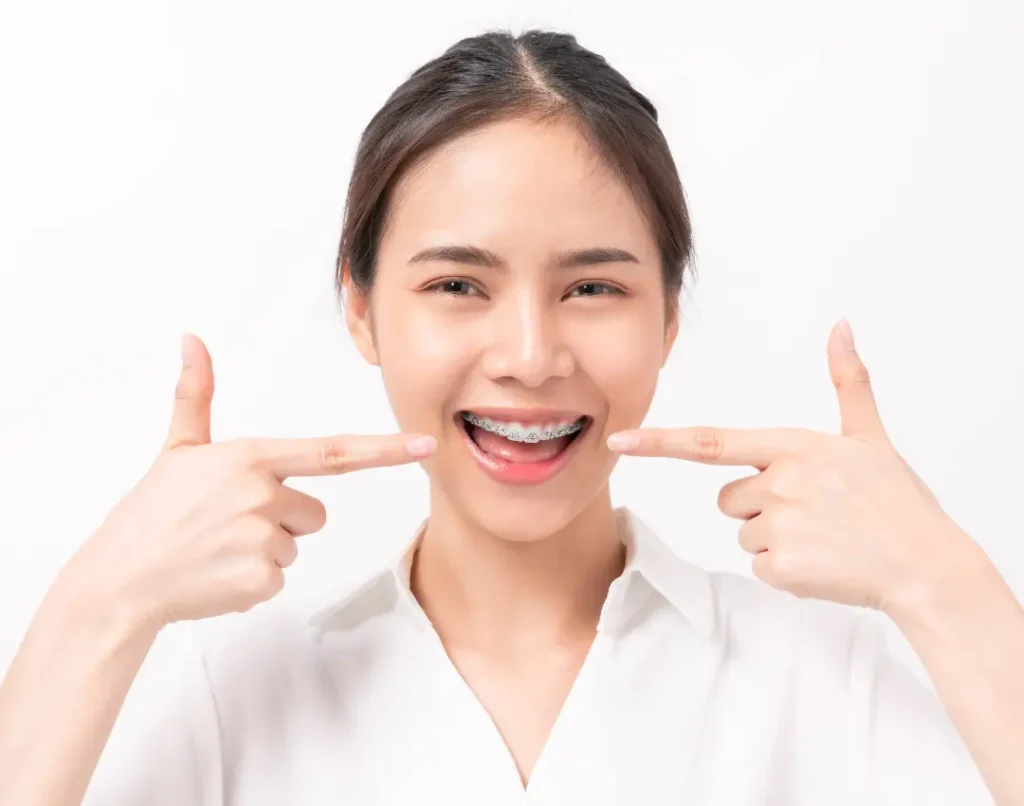
Most working professionals in Pune choose discreet options.
Clear aligners or ceramic braces blend intoeasily daily office life easily, as reality, most people around you are too busy to notice.
Orthodontic treatment does require adjustment, but it rarely disrupts life.
There may be mild soreness after adjustments.
Speech can feel different briefly.
Some food habits need tweaking.
But routines continue.
You go to work.
You travel.
You attend meetings.
You eat out with a little awareness.
In practice, the biggest delays come from missed follow-ups or inconsistent appliance use, not from the treatment itself.
Patients who treat orthodontic care as routine adapt faster and finish more smoothly.
You don’t need a special diet.
You just need to eat smart.
Hard foods cause the main problems because they stress brackets and wires.
Avoid biting directly into:
Sticky foods create a different problem.
They pull on brackets and get trapped easily.
Go slow with:
Indian food itself is not the issue.
The way you eat it matters more.
Chapati, bhakri, rice, dal, sabzi, idli, dosa, and upma are all fine.
Cut food into smaller pieces.
Chew slowly.
Use both sides of the mouth.
If food gets stuck, don’t panic.
Rinse well.
Brush gently.
Interdental brushes work better than toothpicks.
Most patients adjust within a few weeks without thinking about it.
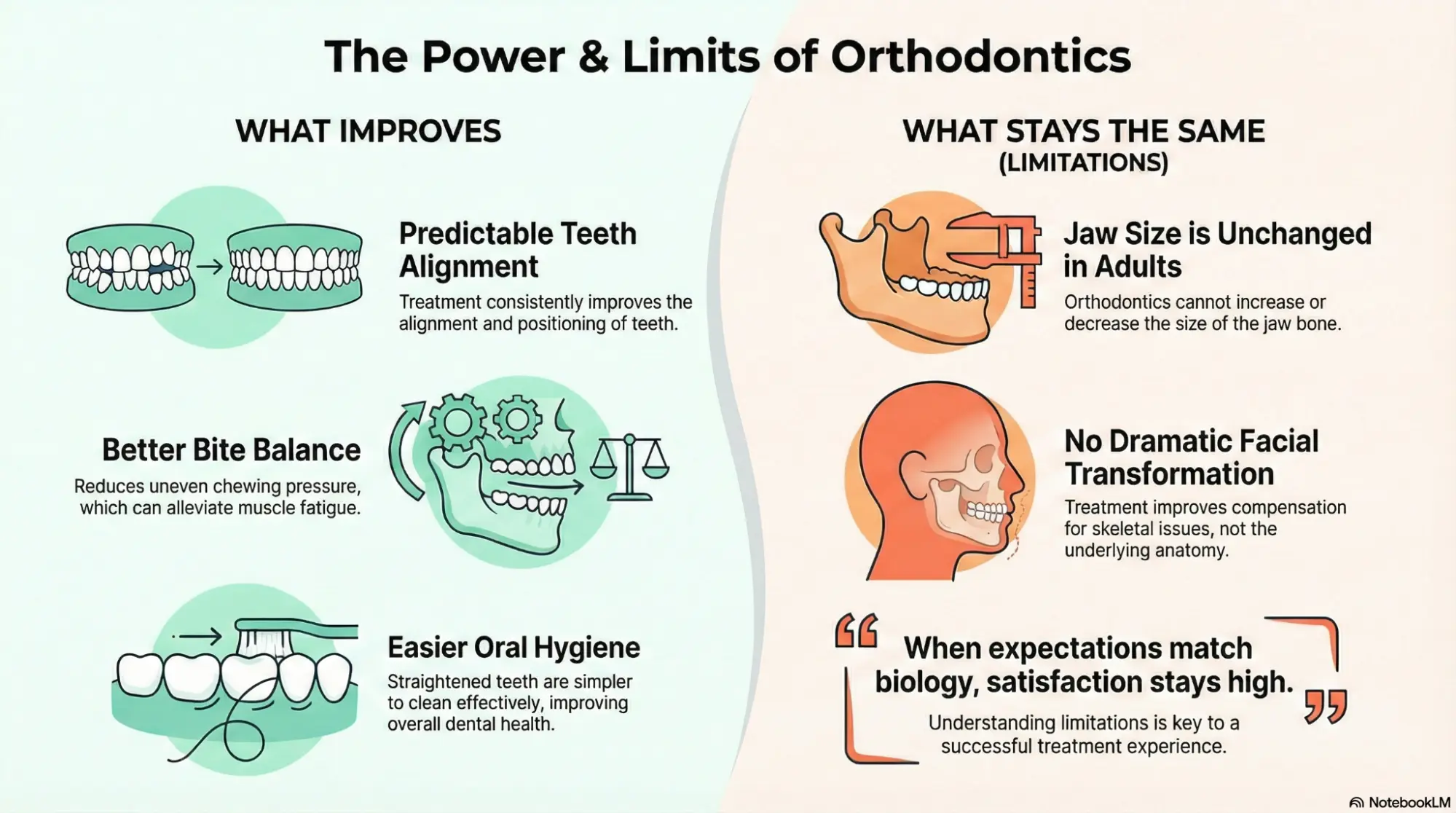
Orthodontic treatment improves alignment in a very predictable way.
Cleaning becomes easier.
Bite balance improves.
Uneven chewing pressure reduces fatigue, which often settles.
What it does not do is change jaw size in adults.
Facial structure does not transform dramatically.
Some skeletal issues sit outside orthodontic correction.
In those cases, we improve compensation, not anatomy.
When expectations match biology, satisfaction stays high.
Shorter timelines sound attractive.
But biologically, teeth need time to move safely.
Moving too fast stresses roots and gums.
It increases relapse risk.
In practice, controlled movement protects long-term stability.
Orthodontic treatment should finish well, not just finish early.
Aligners are not always more comfortable.
Braces are not always more effective.
Simple spacing or mild crowding responds well to aligners.
Complex rotations or bite corrections often respond better to braces.
Comfort depends on the case, not the appliance.
The right choice fits your alignment problem, your habits, and your expectations.
Trends don’t decide outcomes.
Suitability does.
Waiting feels easier.
But teeth rarely stay still.
Crowding often worsens gradually.
Bite imbalance increases quietly.
Gum stress builds without obvious symptoms.
Early correction usually reduces future complexity.
That said, timing must fit real life.
Work schedules.
Family responsibilities.
Financial comfort.
Sometimes waiting is reasonable.
Sometimes, delaying only adds difficulty.
The right decision is informed, not rushed.
Teeth shift throughout life.
That never stops.
Retainers are not optional.
They are part of long-term care.
Think of treatment in two phases.
First, teeth are aligned.
Then, that alignment is protected.
Retention becomes routine quickly.
Patients who accept this early remain satisfied for years.
A simple way to think about it.
If cleaning is already difficult, waiting rarely helps.
If crowding is progressing, early correction reduces complexity.
If your lifestyle is stable now, treatment is better suited.
If retention feels like a burden, expectations need to be reset.
Most people don’t regret orthodontic treatment because of discomfort or the time it takes.
They regret postponing it.
They notice easier cleaning.
Fewer dental problems later.
Better confidence while speaking and smiling.
Not dramatic changes.
But meaningful ones.
At Dev’s Oral Care, treatment is planned around real lives, not ideal diagrams.
If you are considering orthodontic treatment, the question is not whether your teeth look bad enough.
It is whether your mouth will age comfortably without support.
That answer becomes clear through an honest conversation.
And that is always the right place to start.