Many patients hear the word “cleaning” during a dental visit, but later see “scaling” written on their treatment plan or bill. That change in terminology often creates confusion.
In everyday conversation, dentists often use cleaning to describe the routine removal of plaque and tartar from teeth. In clinical terms, that process is called dental scaling.
So in many cases, teeth cleaning and scaling refer to the same visit.
The difference becomes relevant only when deposits extend below the gum line or when the gums show signs of inflammation. In those situations, the dentist may recommend deeper scaling to remove hardened plaque and calculus near the gums.
In simple terms:
The procedure itself is part of professional teeth cleaning, but the depth and purpose may vary depending on the condition of the gums.
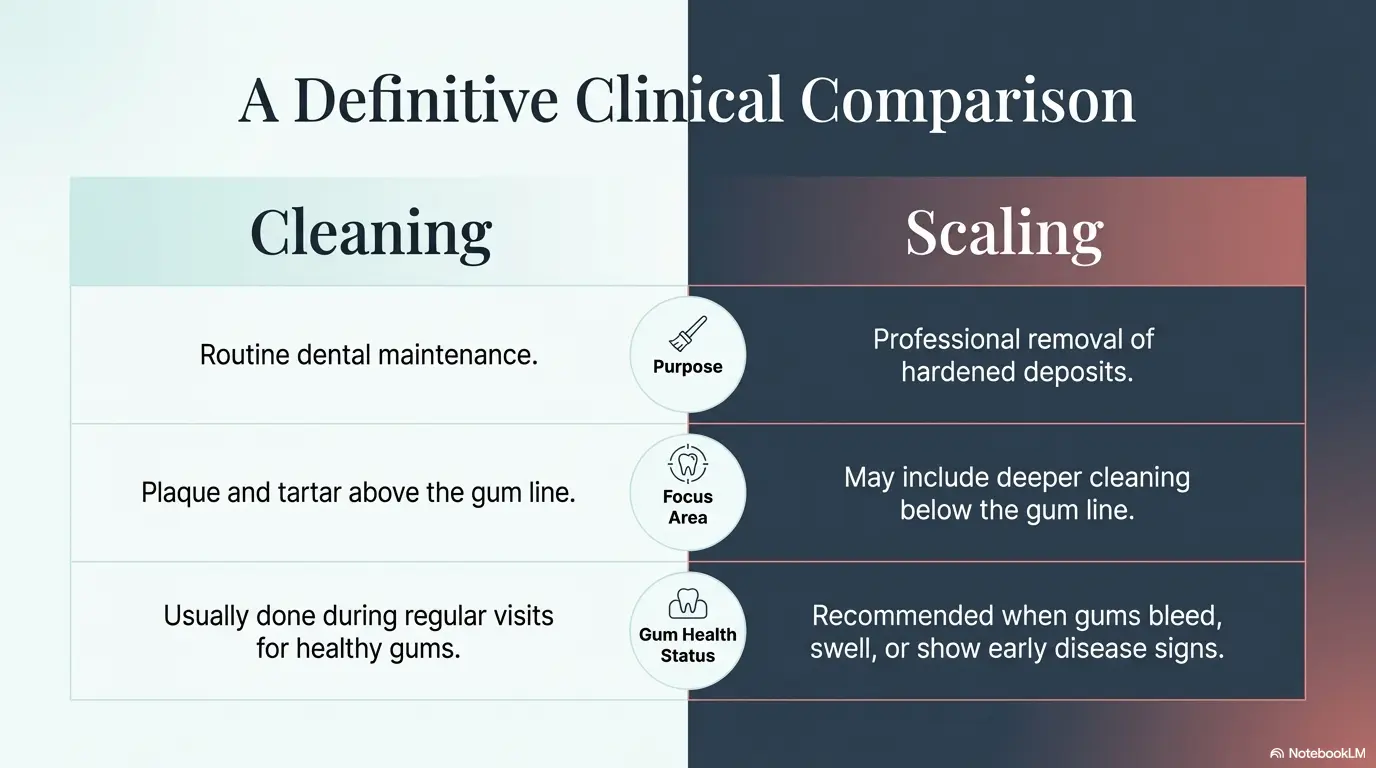
Cleaning
Scaling
In many patients with healthy gums, the two terms describe the same preventive procedure.
Part of the confusion comes from the difference between everyday language and clinical terminology.
Patients usually hear the word “cleaning” during consultations because it sounds familiar. However, dental records and treatment plans often use the procedural term scaling.
This does not mean the dentist changed the treatment. It simply reflects the terminology used in clinical documentation.
During a routine dental assessment, the dentist evaluates plaque buildup, gum health, and tartar accumulation near the gum line. Based on that evaluation, the treatment recommendation may be recorded as scaling even if the visit is described to the patient as a cleaning.
In many cases, especially during regular dental visits, cleaning and scaling refer to the same procedure.
When plaque or calculus buildup is mild and limited to the tooth surface above the gums, the dentist performs supragingival cleaning. This involves removing visible deposits and polishing the teeth.
This type of routine dental cleaning is preventive. It helps maintain oral hygiene and reduces the risk of gum inflammation.
For patients who visit the dentist regularly and maintain good oral hygiene, scaling is simply part of preventive dental care rather than treatment for disease.
Scaling becomes more than routine maintenance when deposits extend below the gum line.
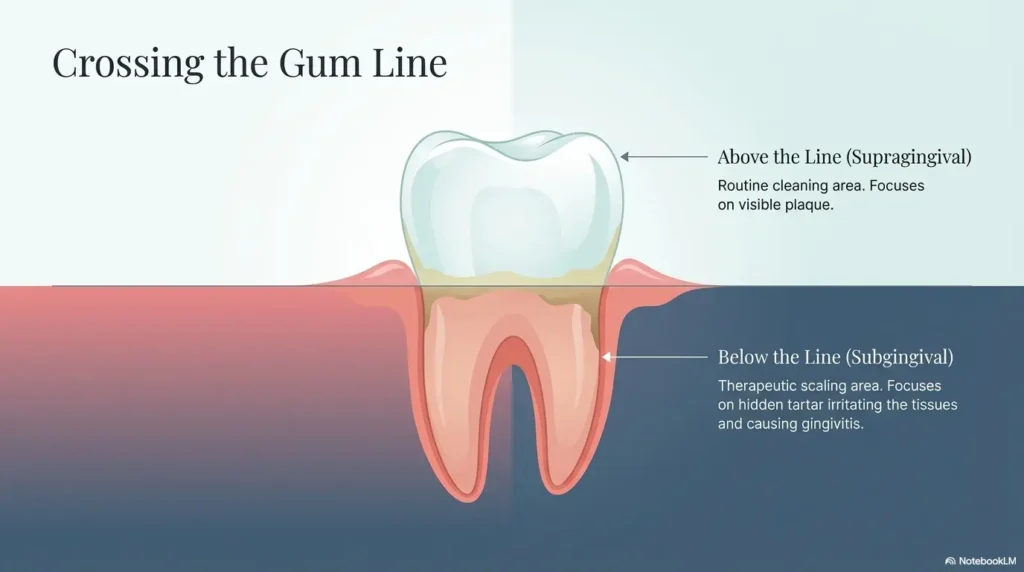
When tartar accumulates under the gums, it can irritate the tissues and lead to gum inflammation or early gum disease (gingivitis). In these situations, the dentist performs subgingival scaling, which removes deposits from the root surface near the gums.
Signs that deeper scaling may be required include:
In these cases, scaling becomes therapeutic cleaning, aimed at controlling gum inflammation and restoring gum health.
A common concern patients express is whether scaling can weaken teeth or damage enamel.
In reality, professional scaling removes hardened plaque and calculus, not tooth structure. The instruments used during scaling are designed to detach bacterial deposits without harming enamel.
Some people notice that their teeth feel slightly loose after scaling. This sensation usually occurs because the tartar that was occupying space around the inflamed gums has been removed, revealing the true condition of the gums.
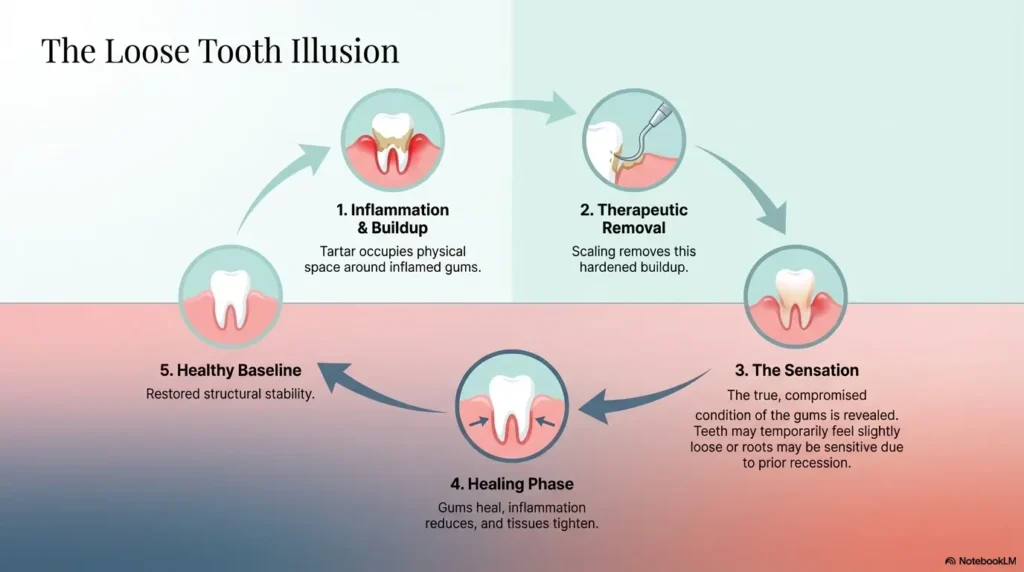
Similarly, tooth sensitivity after scaling can occur temporarily. If gum recession has already exposed the root surface, cleaning that area may make it more sensitive for a short time.
These effects usually settle as the gums heal and inflammation reduces.
Not every patient requires deep scaling.
The need for scaling depends on gum health, the severity of plaque buildup, and the results of clinical evaluation during the dental examination. Some patients only require routine preventive cleaning during their visits.
Others may need deeper scaling if tartar has accumulated beneath the gums or if gingivitis or early gum disease is present.
There is also no universal rule for scaling frequency. The interval depends on oral hygiene habits, the rate of plaque formation, and the condition of the gums.
A dentist determines the need for scaling through a clinical evaluation, not by following a fixed calendar schedule.
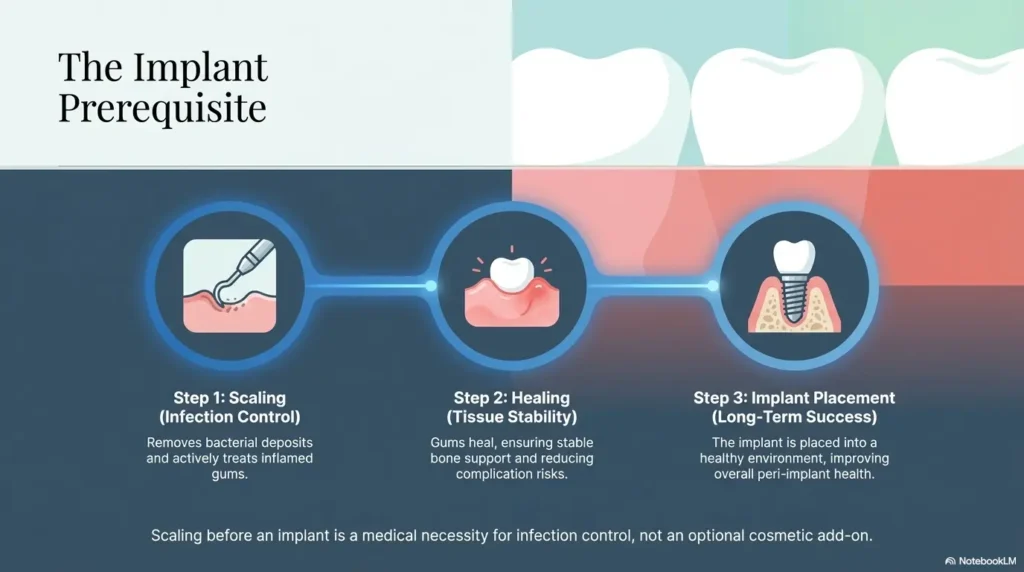
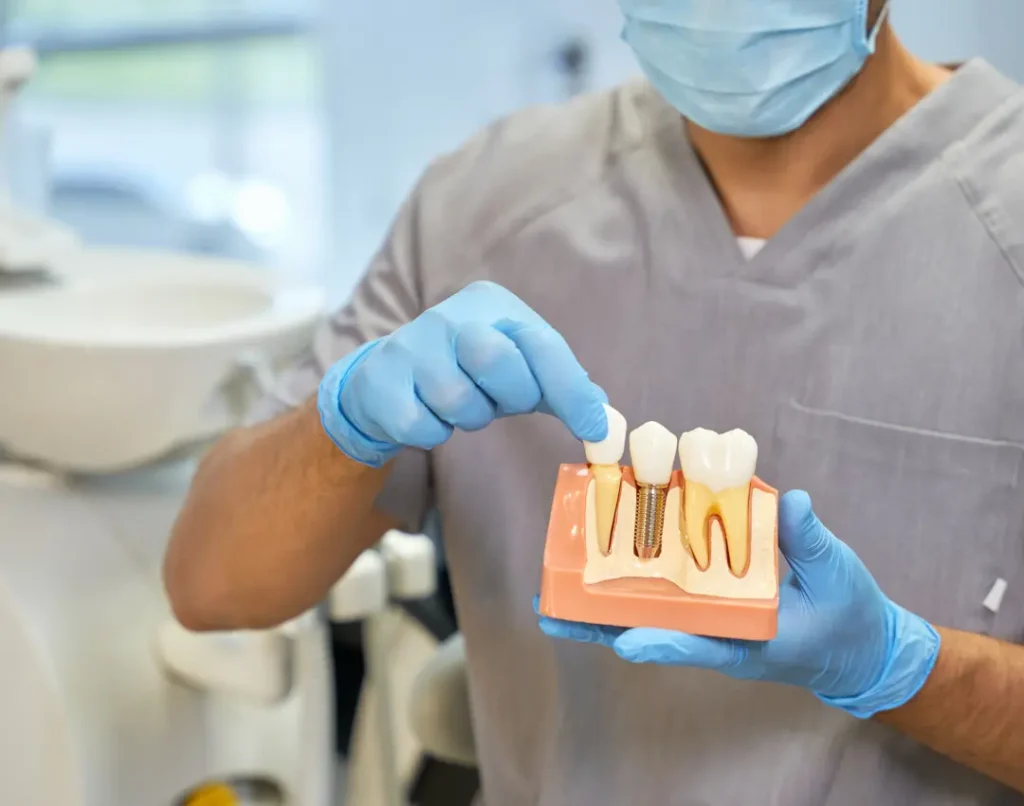
Patients planning dental implants are often advised to undergo scaling before the procedure. This recommendation is related to gum stability and infection control.
Dental implants rely on healthy gum tissues and stable bone support. If the gums are inflamed or infected, the risk of complications during implant healing increases.
Scaling helps remove bacterial deposits around the gums, reducing the risk of infection before implant placement and improving peri-implant health. In this context, scaling is part of preparing the mouth for long-term implant success rather than an additional cosmetic procedure.
Another reason patients question scaling is the cost difference.
Routine cleaning usually involves removing deposits from the visible surfaces of teeth. Scaling that involves subgingival cleaning requires more time, precision, and instrumentation to clean the root surfaces near the gums.
Because the procedure is more detailed and therapeutic than purely preventive, scaling may cost more than routine cleaning.
However, the purpose remains the same: controlling bacterial deposits that can affect long-term gum health.
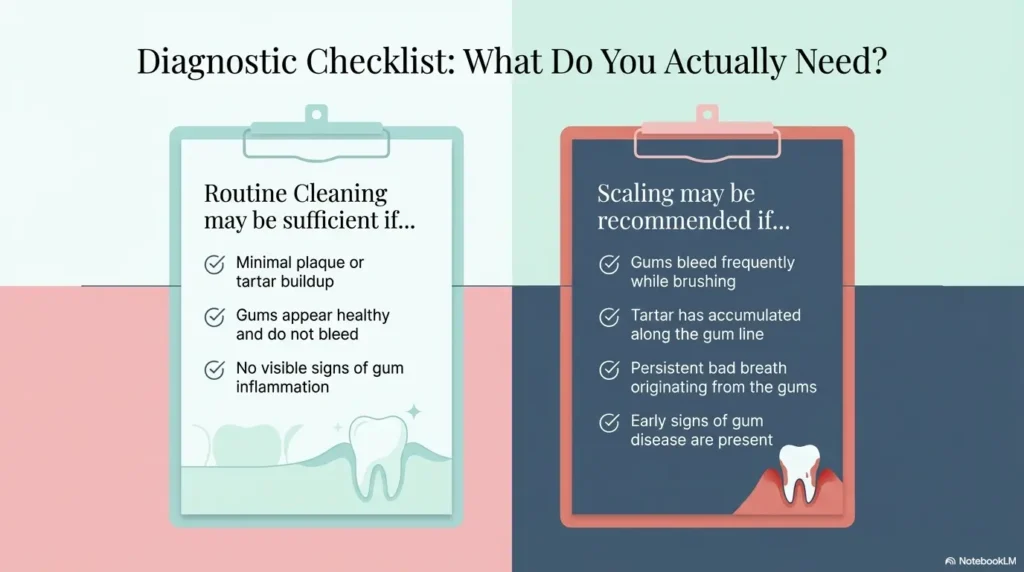
In many cases, the difference between cleaning and scaling becomes clear after a dental examination.
Routine cleaning may be sufficient if:
Scaling may be recommended if:
Understanding the differences and benefits of teeth scaling and cleaning can help you to make informed decisions about your dental care.
In practice, both procedures are part of maintaining healthy gums and preventing long-term dental problems. The exact approach depends on individual gum health and the depth of bacterial deposits, not simply the terminology used during a consultation.
Neither is inherently better. Cleaning usually refers to routine plaque removal during regular dental visits, while scaling may include deeper cleaning near or below the gum line when tartar buildup or gum inflammation is present. The appropriate option depends on your gum health and the amount of calculus buildup.
Yes, some patients may require scaling every 3 - 4 months if they are prone to tartar buildup or have a history of gum disease. However, the frequency should be decided after a dental evaluation, as many people only need professional cleaning once or twice a year.
Routine teeth cleaning is usually not painful. Patients may feel mild vibration or pressure during plaque and tartar removal. If the gums are inflamed or sensitive, slight discomfort can occur, but it is generally temporary.
No, scaling does not cause teeth to fall out. If teeth feel loose after scaling, it is usually because tartar that was supporting inflamed gums has been removed, revealing existing gum disease. Proper treatment and oral hygiene help stabilize the gums over time.